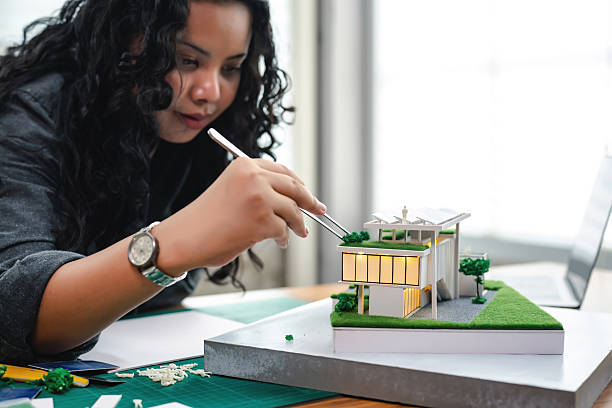
There’s a meaningful difference between building a general-purpose architectural model and building a genuinely fine miniature — the kind you’d see in a museum diorama, a collector’s display case, or a heritage exhibition where every rivet and window frame needs to hold up under close inspection. This is a different discipline entirely, and it requires a miniature model making company with a specific set of skills that not every general workshop has mastered.
Scale Changes Everything About the Process
At larger scales, a millimetre of imprecision barely registers. At the fine scales typical of collector miniatures or detailed dioramas, that same millimetre can throw off an entire proportion. This forces a different approach to tooling, materials and technique. Fine miniature work often relies on resin casting, photo-etched metal for tiny details, and hand-painting under magnification, methods that a studio focused mainly on large architectural presentation models may not use regularly.
Where Miniatures Are Actually Used
Museums and heritage projects commission miniatures to recreate historical structures or events at a scale visitors can appreciate as a whole. Collectors commission scaled versions of vehicles, aircraft, ships and buildings for display. Educational institutions use them to teach concepts that are hard to grasp from a textbook diagram. Even courtroom exhibits occasionally use miniature reconstructions to help explain physical evidence to a jury in a way photographs can’t.
Each of these use cases has its own standards for accuracy and finish, and a specialised team will know the difference between what a museum curator expects versus what a private collector wants.
The Painting and Finishing Skill Set
Painting a miniature convincingly is closer to fine art than to industrial finishing. Weathering effects, subtle colour variation, realistic texture on tiny surfaces — these all require a steady hand, good reference material, and genuine artistic sensibility, not just technical accuracy. Studios that do this well often employ or train specialist painters separately from the fabrication team, because the two skill sets don’t always overlap in the same person.
Durability Matters More Than People Expect
Fine miniatures are often handled, transported, and displayed for years, sometimes decades. A piece that looks stunning on delivery but can’t survive being dusted or gently repositioned isn’t actually finished work, it’s a liability. Experienced makers build in structural reinforcement that isn’t visible to the eye but keeps delicate elements — antennas, railings, thin architectural details — from snapping off during normal handling.
Questions Worth Asking Before You Commission One
If you’re considering a fine miniature project, ask to see close-up photographs of previous work, not just wide shots that can hide imperfections. Ask what materials they typically use at your intended scale, and how they handle repairs if something is damaged after delivery. A studio confident in their fine-detail capability will usually be happy to walk you through examples in depth.
How Pricing Differs From Larger Presentation Models
It can be surprising to first-time clients that a small miniature sometimes costs more per square inch than a much larger presentation model. This comes down to labour intensity rather than material cost, since fine detailing, hand painting and precision fabrication at small scale simply take far more skilled hours per unit of size than a larger, more straightforward architectural piece. A reputable miniature model making company will usually explain this clearly rather than leaving clients to assume that smaller automatically means cheaper.
Understanding this upfront helps set realistic expectations for budget and timeline. A detailed collector’s miniature or a museum diorama piece can reasonably take several weeks even though the finished object might fit comfortably on a bookshelf, precisely because of how much careful, close-range work goes into every small element.
Caring for a Miniature After Delivery
Once delivered, fine miniatures generally need a bit more care than larger models, since delicate elements are more vulnerable to dust, humidity and accidental knocks. Ask the studio for basic care guidance, things like how to clean the piece safely, whether it should be kept under glass or away from direct sunlight, and who to contact if a small element does eventually need repair. Studios that specialise in this kind of work usually offer repair services long after the original delivery, which is worth confirming if the piece is meant to last for years rather than a single event.
Working Closely With the Painter or Detailer
On more ambitious miniature projects, it can genuinely help to have a short conversation directly with the person doing the painting or detailing, not just the project manager coordinating the job. Colour references, texture expectations, and the specific mood you’re going for, whether weathered and aged or crisp and pristine, are much easier to communicate with reference photos and a direct conversation than through a lengthy written brief passed along secondhand. Studios that facilitate this kind of direct access between client and craftsperson often produce results that match expectations more closely on the first attempt.
This is especially worth doing for pieces with sentimental or historical significance, where getting small details right, an aircraft’s exact squadron markings, a heritage building’s original paint colour, matters far more to the client than it might to an outside observer glancing at the finished piece.
Display and Presentation Considerations
A fine miniature deserves thought put into how it will actually be displayed once it arrives. A glass or acrylic display case protects the piece from dust and accidental handling while still allowing close viewing, and many studios offer this as an add-on service, built to match the base of the miniature itself for a cohesive finished presentation. Lighting matters here too, since harsh overhead light can wash out subtle paint work, while soft, angled lighting tends to bring out texture and depth far more effectively.
If the piece is destined for a public exhibition rather than private display, it’s worth discussing security and handling considerations with the studio as well, particularly for genuinely valuable or irreplaceable commissions, so that the display setup protects the work without making it feel inaccessible to viewers.
Conclusion
If your project calls for genuine fine-detail work rather than a general presentation piece, it’s worth seeking out a miniature model making company that specialises specifically in this end of the craft. The difference between competent and exceptional becomes very visible at close range, and that’s exactly the range miniatures are meant to be viewed at.