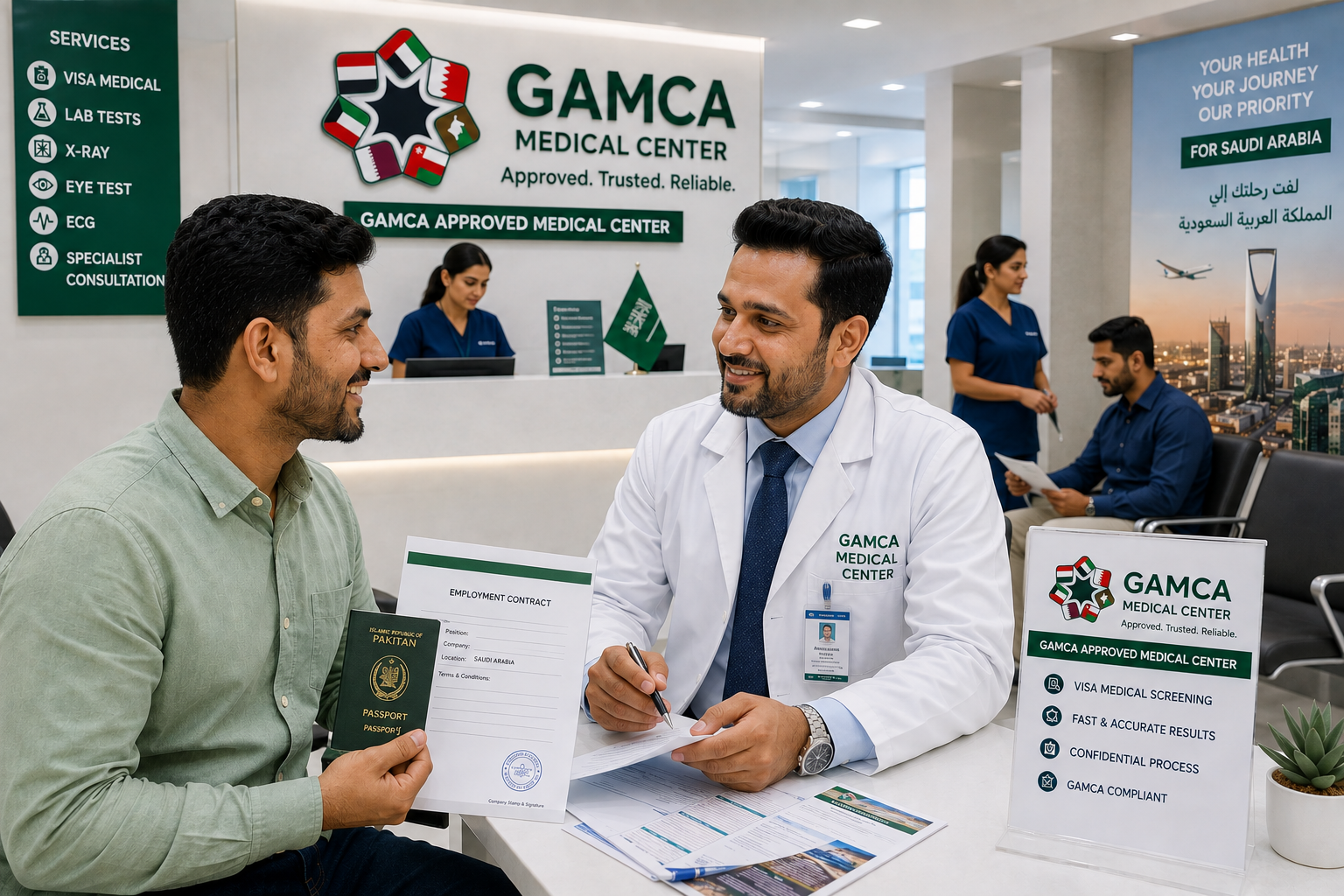
Why This Step Exists at All
Gulf countries welcome enormous numbers of expatriate workers each year, and to manage public health on that scale, they require a standardized medical clearance before a work visa is granted. That’s the reason a Gulf medical appointment isn’t optional if you’re applying from an eligible country — it’s baked into the visa process itself, not an extra step your agency invented on their own to slow you down.
Once you understand that it’s a system-wide requirement rather than something specific to your case, it tends to feel less personal and more like a routine formality everyone in your position has to go through before their travel dates are confirmed.
Picking the Right Clinic
Only centers that are officially approved can issue results Gulf immigration authorities will accept. This isn’t a place to shop purely on convenience or price. Confirm a clinic’s approval status before booking, and ask how quickly they typically turn around results, since this varies more than people expect between centers located in the same city or even the same neighborhood.
What Happens During the Visit
Expect a fairly efficient process: registration, a chest X-ray, blood draws, a general physical exam, and vision and hearing tests. Most clinics move people through in under two hours provided documentation is in order. It helps enormously to arrive with your passport, photographs, and offer letter or visa reference already sorted rather than digging through your bag at the front desk while others wait behind you.
Timing Your Appointment Around Your Job Start Date
Medical certificates typically carry an expiry window, often around three months, so booking too far in advance of your actual travel date can backfire just as much as booking too late. A good rule of thumb is to schedule your Gulf medical appointment once your job offer and visa documentation are largely finalized, leaving enough buffer for results processing and any potential re-test.
If your travel date shifts, which happens more often than people expect with visa processing, check whether your existing certificate is still valid rather than assuming you’ll need to start the whole process over again from scratch. A short call to the issuing clinic can usually confirm this in minutes, and it’s a far better use of your time than guessing and either missing your window or booking an unnecessary repeat exam.
Handling a Flagged Result
If something unexpected shows up in your results, don’t panic and don’t assume it’s the end of the process. Many conditions simply require treatment and a follow-up test rather than an outright disqualification. Talking to the clinic doctor directly about next steps is usually more productive than guessing based on secondhand stories from other applicants online.
What to Pack for the Day
Beyond your paperwork, it’s worth wearing something comfortable and easy to move in, since you’ll likely be asked to change for the chest X-ray. Carry a small snack for after your appointment if you were asked to fast, and keep a printed or digital copy of your booking confirmation handy in case the front desk needs to verify your slot.
Walk-In vs. Scheduled: Which Is Better
Some clinics still accept walk-ins alongside scheduled bookings, but the trade-off is almost always waiting time. A walk-in during a quiet weekday morning might move quickly, while the same clinic on a Sunday afternoon could mean a two- or three-hour wait with no guarantee you’ll even be seen before closing. Scheduling in advance removes that uncertainty entirely and lets you plan the rest of your day around a fixed window.
If your schedule is genuinely flexible and you’re not in a hurry, a walk-in can occasionally work out fine. But for anyone balancing a current job, family responsibilities, or a tight visa timeline, locking in a confirmed slot is almost always the less stressful route.
How Nationality Can Affect the Process
Not every nationality faces identical requirements, since the list of countries subject to this screening is set by the destination country’s immigration policy rather than being universal. If you’re unsure whether your nationality falls under the requirement, the fastest way to confirm is to ask your recruitment agency directly rather than guessing based on what a friend from a different country experienced.
It’s also worth knowing that requirements can shift over time as policies get reviewed, so even returning workers who went through this before shouldn’t assume the exact same rules automatically apply on their next trip. When in doubt, a five-minute call to your agency or the clinic itself is far cheaper, in time and money, than discovering a mismatch after your appointment is already booked.
Frequently Asked Questions
How far in advance should I book? Roughly two to four weeks before your intended travel date usually leaves enough buffer without risking expiry.
Is there an age limit for this screening? Requirements can vary slightly by destination and job type, so it’s worth confirming directly with the clinic.
Can I bring a family member to the same appointment? Many clinics accommodate family bookings, though each person completes their own separate exam.
Making It Simple
At the end of the day, this appointment is a manageable, well-defined part of your move abroad, not the ordeal it sometimes gets built up to be. Book early, choose an approved center, bring the right documents, and you’ll likely be done faster than you expected — leaving more energy for the actually exciting parts of relocating for work. Lock in your Gulf medical appointment as soon as you can, and treat it as one small task on an otherwise long checklist.